

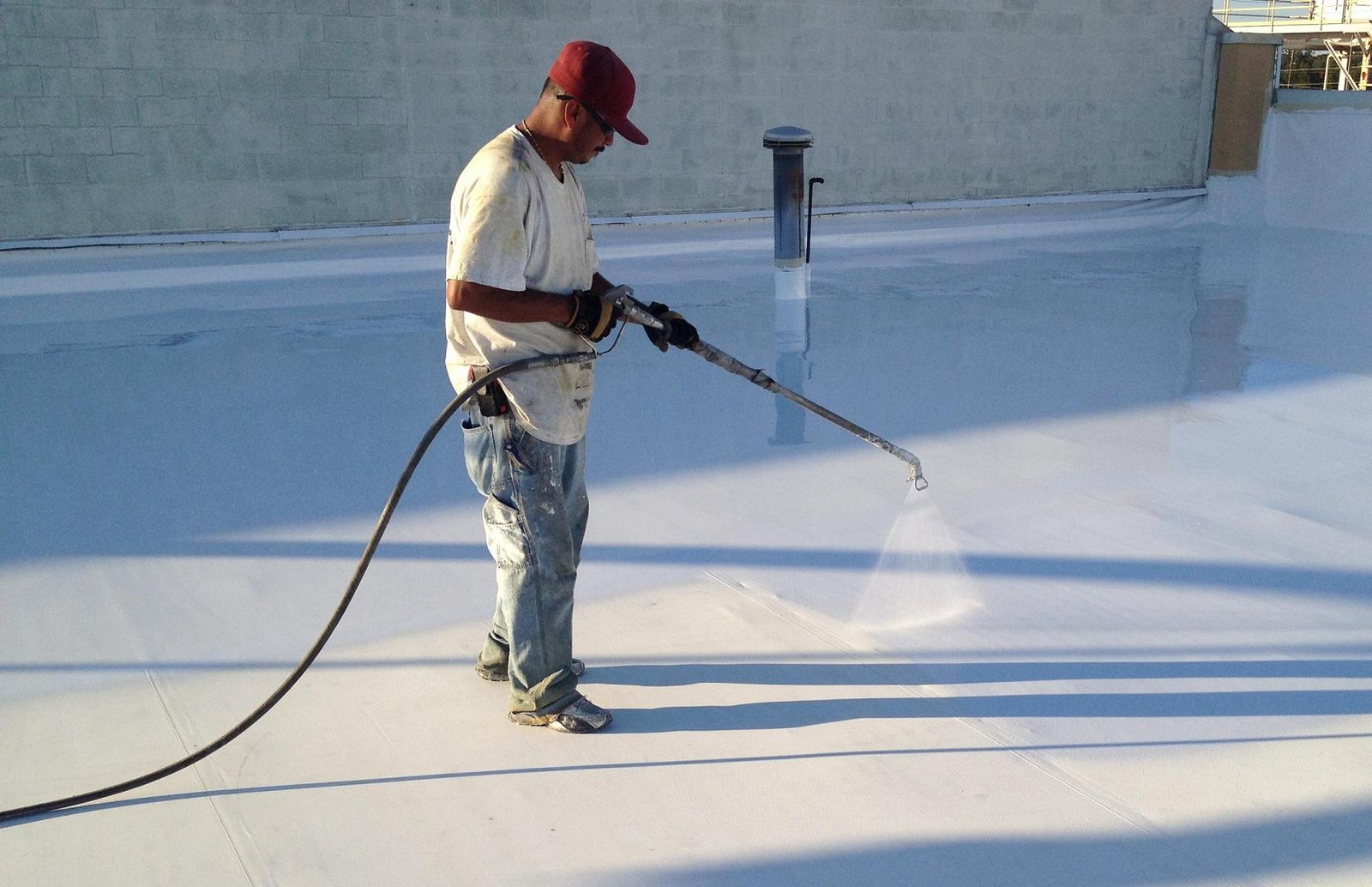
When a commercial roof starts demanding more attention, the pattern can become frustratingly familiar: a leak appears, a repair is made, several months pass, and another problem develops somewhere else. At that point, property owners often assume they have only two choices—keep patching the roof or replace everything. Roof Restoration Coatings can provide a third option for certain roofs, but only when the existing assembly is genuinely suitable for restoration.
That qualification is essential. A coating is not a liquid substitute for roof replacement, nor is it a way to conceal moisture, unstable materials, failed flashing, or widespread deterioration. Successful restoration begins by identifying why the roof is having problems and determining how much of the existing system remains worth preserving.
Repeated repairs are addressing individual symptoms, but nobody has established whether the overall commercial roof remains suitable for continued service.
The Problem: An Aging Roof Is Becoming a Maintenance Cycle
One isolated leak doesn’t necessarily indicate a failing roof. A damaged flashing detail, localized membrane defect, or problem around a penetration may be repairable while the surrounding assembly remains serviceable. The situation changes when repairs become a pattern.
Imagine a facility manager reviewing several years of maintenance records. One repair appears near an HVAC curb. Another occurs around a drain. Later, a different section develops a leak after heavy weather. Each event may have received an appropriate localized repair, yet collectively they raise a larger question: are these independent defects, or evidence of broader deterioration?
Continuing to patch without answering that question can make roof management increasingly reactive. Conversely, replacing the entire roof without evaluating whether much of the existing assembly remains usable can introduce a larger construction scope than conditions justify.
Restoration sits between those two extremes. The objective is to preserve suitable roofing materials, correct identified deficiencies, and install a compatible protective system over a properly prepared roof. But restoration only works when diagnosis comes first.
Stop treating each new leak as an isolated event. Review the roof’s repair history, current condition, drainage, flashing, penetrations, and potential moisture concerns as one connected system.
Why It Happens: The Roof Is More Than Its Visible Surface
Commercial roofs age under several influences at once. Sunlight and temperature cycles affect exposed materials. Rain tests seams, flashing, transitions, and drainage. Maintenance technicians travel across the roof to service mechanical equipment. New penetrations may be introduced years after the original installation.
Then there is water management. A low-slope roof may appear flat from the ground, but its drainage strategy is critical. Drains, scuppers, slopes, and transitions need to move water away as intended. A coating can renew a suitable roof surface, but it cannot make an unresolved drainage deficiency disappear.
Moisture beneath the visible surface creates another complication. The top of a roof can sometimes tell only part of the story. Where conditions suggest moisture within the assembly, further investigation may be necessary before restoration eligibility can be established.
This is why a proposal based primarily on square footage and coating type provides an incomplete picture. Before choosing among Fluid-Applied Roofing Systems, the contractor needs to understand what the new material will actually be applied over.
Substrate compatibility matters. Existing repairs matter. The condition of seams and flashing matters. So do equipment curbs, penetrations, perimeter transitions, and areas exposed to frequent rooftop traffic.
The visible roof field may look like the obvious problem, while the conditions controlling restoration eligibility are located at details, beneath the surface, or within the roof’s drainage system.
Common Mistakes: When Coatings Are Asked to Solve the Wrong Problem
The biggest restoration mistakes usually happen before the coating is applied. One of the most serious is assuming that a continuous liquid-applied surface can compensate for whatever lies underneath it. It cannot.
Coating over unresolved moisture concerns is one example. If investigation shows that portions of the existing assembly require corrective work, those conditions need to be addressed according to the project design. Simply covering the surface doesn’t remove affected materials or resolve the source of water intrusion.
Insufficient preparation creates another risk. Dirt, contaminants, incompatible existing materials, loose components, and unresolved defects can interfere with the specified coating system. Cleaning, repairs, detailing, primers, reinforcement, and other preparation should follow the requirements of the selected system.
Other common mistakes include:
- Ignoring recurring drainage problems.
- Applying coating before completing necessary repairs.
- Overlooking flashing and penetrations.
- Selecting silicone, acrylic, or polyurethane primarily by price.
- Assuming all coating products are compatible with all roof substrates.
- Treating a reflective surface as a guarantee of a specific energy-cost reduction.
| Before: Reactive Approach | After: Restoration Approach |
|---|---|
| Choose a coating immediately | Inspect the existing roof first |
| Keep treating recurring repairs individually | Investigate the pattern and underlying causes |
| Coat around drainage problems | Evaluate and correct drainage deficiencies where required |
| Select primarily by price or coating type | Select according to substrate, conditions, and system requirements |
Treat the coating as the final protective component of a restoration process—not as the first response to an aging commercial roof.
Once those mistakes are removed from the process, the real value of restoration becomes much easier to see. The next question is no longer, “What can we put over this roof?” It becomes, “What must we inspect, repair, and prepare before this roof is ready to be restored?”
The Solution: Build Restoration from the Roof Up
Once the existing roof has been evaluated and confirmed as a reasonable restoration candidate, the project can move from diagnosis to execution. The important shift is that coating application comes near the end of the process—not at the beginning.
First, document the existing conditions and define the repair scope. Areas of deterioration that can be corrected within the restoration design should be addressed before coating begins. If investigation identifies conditions that make restoration inappropriate, the project should change direction rather than forcing a coating solution onto an unsuitable roof.
Next comes preparation. The roof surface must be cleaned and prepared according to the requirements of the selected system. Seams, flashing, penetrations, equipment curbs, drains, and perimeter transitions may require specific treatment. Depending on the roof and product, primer or reinforcing materials may also form part of the restoration assembly.
Only after those conditions are addressed should the fluid-applied coating become the focus. Silicone, acrylic, and polyurethane systems have different characteristics, approved substrates, application requirements, and performance profiles. The correct chemistry is therefore the one that fits the existing roof and project requirements—not simply the product category with the most appealing marketing claims.
Use a condition-based sequence: Assess → Investigate → Repair → Prepare → Detail → Apply → Inspect. Each stage should establish a suitable foundation for the one that follows.
Application itself needs the same discipline. Coating should be installed according to the specified coverage, thickness, environmental conditions, curing requirements, and other manufacturer instructions. A roof that looks uniformly coated from a distance has not necessarily met those requirements.
Quality control matters because restoration is a system. The finished surface is only as credible as the preparation and detailing beneath it.
Best Practices: Make Restoration Easier to Maintain
A successful coating project should create more than a renewed roof surface. It should also create a better starting point for future roof management.
Keep records of the coating manufacturer and product, installation information, repaired locations, photographs, inspection findings, and relevant warranty documentation. If a problem develops later, those records can help the building owner and roofing professional understand what changed and where to begin evaluating it.
Drainage should remain a routine maintenance priority. Debris around drains and scuppers can interfere with water movement, while changes in areas that retain water deserve investigation. Coating does not eliminate the need to manage water across a low-slope roof.
Rooftop traffic deserves similar attention. HVAC technicians and other contractors may need access to equipment, but their work can introduce new conditions after restoration. New penetrations, disturbed flashing, dropped tools, or repeated traffic through the same areas should not go undocumented.
| Before: Reactive Roof Management | After: Preventive Roof Management |
|---|---|
| Inspect after an interior leak appears | Schedule condition-based inspections |
| Limited repair history | Document repairs and affected roof areas |
| Drainage checked after problems develop | Keep drains and scuppers under routine observation |
| Untracked rooftop service work | Record penetrations and significant rooftop changes |
| Each leak treated as an isolated event | Compare new conditions with previous inspection records |
A restored roof can return to reactive maintenance if inspections stop as soon as the coating project is complete.
Use completion of the restoration project as the beginning of a documented maintenance cycle. Monitor drainage, flashing, penetrations, repaired areas, coating condition, and rooftop activity over time.
Restore What Still Has Value
The central challenge with an aging commercial roof isn’t finding a product capable of covering it. The challenge is determining whether the roof underneath that product is still worth preserving.
When the existing assembly remains suitable, roof restoration coatings can become part of a practical strategy: correct localized deficiencies, prepare the surface properly, resolve critical details, apply a compatible fluid-applied system, and establish a new maintenance baseline.
When deterioration is widespread, underlying conditions are unsuitable, or moisture-related problems cannot reasonably be resolved within a restoration scope, replacement may be the more responsible solution. A coating should never be expected to compensate for a roof that no longer provides an appropriate foundation.
That distinction is what separates restoration from simply covering an old roof. One attempts to hide age. The other evaluates what remains useful and protects it deliberately.
For commercial property owners, the most productive question is therefore not, “Can this roof be coated?” It is, “What does the condition of this roof tell us we should do next?”
Answer that question first, and repair, restoration, or replacement becomes a much clearer decision.